
Changes in texture, fine lines, and lingering acne scars can affect how your skin looks and feels. We begin by understanding your concerns, reviewing your skin history, and assessing whether microneedling is an appropriate next step.
Microneedling uses fine needles to create controlled micro-injuries in the skin, triggering a repair response that supports collagen production. As the skin heals and remodels, selected scars and lines may become less noticeable, with improvement developing gradually.
Your treatment plan considers your skin type, sensitivity, healing history, and goals. We also discuss realistic expectations, recovery time, and how your home skin-care routine can support treatment.
Who it may help
- Those concerned about uneven skin texture.
- Individuals looking to soften the appearance of fine lines.
- Patients with selected depressed acne scars after active breakouts are controlled.
- Those seeking gradual improvement through a personalized skin-treatment plan.
At a glance
- Pillar
- Aesthetics
- Treatment
- Conventional microneedling
- Focus
- Texture, fine lines, and selected acne scars
- Results
- Gradual improvement; a series may be recommended
- Recovery
- Temporary redness and sensitivity; timing varies
- Care
- In person
- Booking
- By appointment
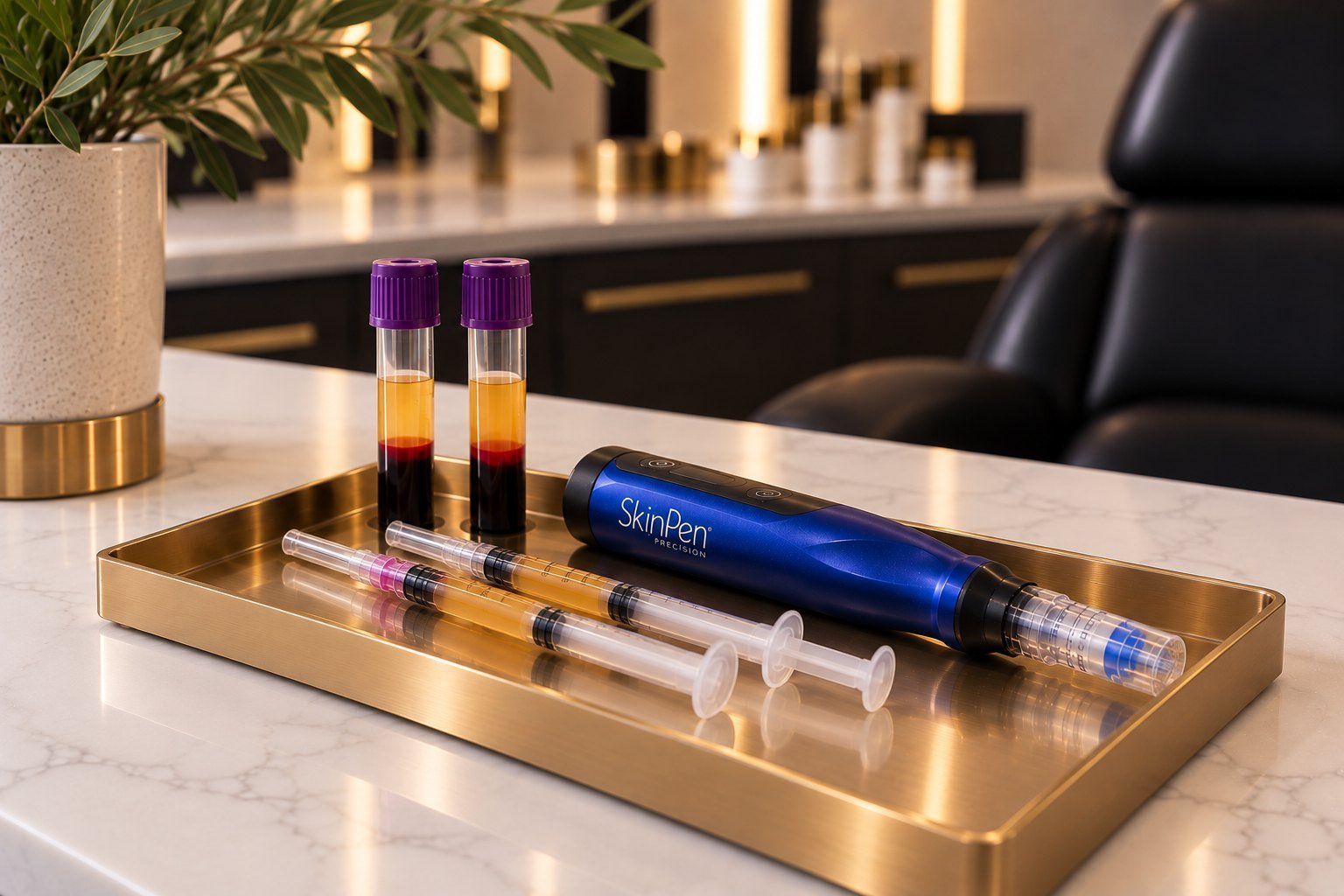
PRP and Microneedling
For selected concerns, your consultation may also include a discussion of PRP alongside microneedling. Explore our PRP & PRF page to learn more.
Fine needles create controlled micro-injuries that stimulate the skin’s repair response and collagen production. This process can gradually improve the appearance of selected texture concerns, wrinkles, and scars.
Improvement develops over weeks to months as the skin heals and remodels. Early swelling or a temporary glow does not represent the final result. Timing and degree of improvement vary.
A series may be recommended, particularly for acne scarring. The number and spacing depend on your concern, skin response, and device protocol. We reassess your progress rather than promise a fixed outcome.
You may feel prickling, pressure, or discomfort. Topical numbing may be used when appropriate, and your comfort is monitored throughout treatment.
Expect temporary redness and sensitivity, sometimes with swelling, dryness, or peeling. Recovery can take several days or longer depending on the treatment and your skin. Plan ahead for important events and follow your aftercare instructions.
Microneedling for acne scars is different from treating active acne. Treatment is generally postponed over inflamed breakouts or infection. We assess whether acne needs to be controlled before addressing residual scarring.
Microneedling may be an option for a range of skin tones, but suitability and pigment-change risk require an individual assessment. Tell us about melasma, previous dark marks after irritation, or abnormal scarring.
Active skin infection, open wounds, certain inflammatory skin conditions, impaired healing, and a history of abnormal scarring may affect suitability. We review medications, including isotretinoin and blood thinners, and any history of cold sores. Elective treatment is deferred during pregnancy and breastfeeding. Do not stop prescribed medication without guidance from the prescriber.
Follow the specific aftercare plan provided. Gentle cleansing, approved moisturization, and sun protection are important. Retinoids, exfoliating acids, makeup, and other potentially irritating products may need to be paused until the skin has recovered.
No. Microneedling uses a needling device to stimulate a skin repair response. PRP and PRF are preparations derived from your own blood and involve a different process. These services have separate considerations, risks, and consent discussions.
Pricing depends on the treatment area and recommended plan. We review the total before treatment and explain any recommended series so you can make an informed decision.