
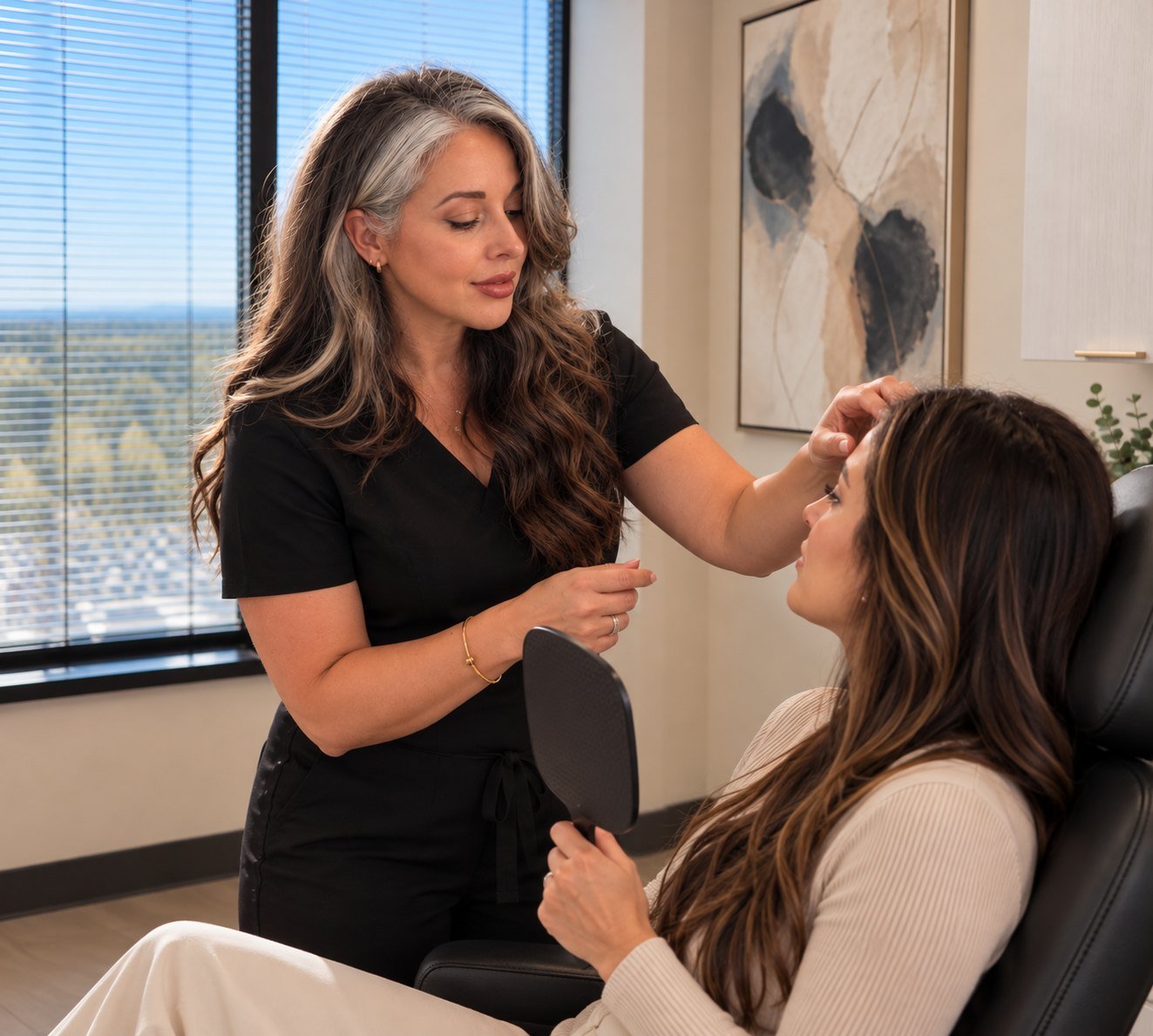
Platelet-rich plasma (PRP) and platelet-rich fibrin (PRF) are prepared by drawing a small amount of your blood and processing it to separate selected components. Platelets contain growth factors involved in tissue repair.
These preparations may be considered for selected aesthetic concerns, but they are not interchangeable. Preparation methods, clinical applications, and the strength of supporting research differ.
We begin with your concern and its underlying cause. Your assessment guides whether a platelet-based treatment is appropriate, which preparation to consider, and what improvement is realistic. Treatment uses your own blood, but it still carries medical risks.
Who it may help
- Those exploring treatment for selected skin texture or fine-line concerns.
- Individuals interested in platelet-based options after discussing the evidence and alternatives.
- Patients with diagnosed pattern hair thinning who may be candidates for PRP.
- Those comfortable with gradual, variable results and a possible treatment series.
At a glance
- Pillar
- Aesthetics
- Treatment
- Platelet-based preparations from your own blood
- Skin
- PRP or PRF considered after assessment
- Hair
- PRP for selected pattern hair thinning
- Results
- Gradual and variable; a series may be recommended
- Care
- In person; blood draw required
- Booking
- By appointment
A Combined Approach
For selected patients, PRP may be considered alongside microneedling to address skin texture, acne scarring, or pattern hair thinning. Some studies suggest additional improvement with combination treatment, although evidence is still developing and results vary.
Your consultation helps determine whether a combined approach fits your concerns, medical history, and treatment goals.
PRP is a platelet-rich plasma preparation. PRF preparations incorporate a fibrin component, and their composition depends on the processing method. They differ in preparation and handling. Neither is automatically better, and recommendations depend on the intended treatment and supporting evidence.
PRP may improve hair density in selected patients with pattern hair loss. A diagnosis comes first, because shedding and thinning have many causes. Results vary, and treatment may be considered alongside other appropriate hair-loss therapies. It does not guarantee regrowth.
PRF is being studied for hair applications, but its evidence base is less established than PRP’s. Our hair-treatment recommendations focus on the evidence for the specific preparation rather than treating PRP and PRF as equivalent.
Studies suggest possible improvement in selected skin-quality measures, but research is limited and methods vary. These treatments do not reliably replace filler for volume, neuromodulators for expression lines, or surgery for significant laxity.
Any improvement develops gradually. Skin changes may be assessed over weeks to months; hair-density changes generally require several months to evaluate. Your response, treatment plan, and underlying concern influence timing.
A series may be recommended, with reassessment before further treatment. The number, spacing, and need for maintenance depend on the indication, preparation, and your response. A fixed result cannot be promised.
Temporary swelling, bruising, redness, or tenderness can occur at the treatment or blood-draw sites. Recovery varies by area and technique. Allow time before important events and follow your aftercare instructions.
No. Using your own blood does not eliminate the risks of infection, bleeding, tissue injury, or reactions to other materials used during treatment. Preparation and injection technique are important.
We review your health history, medications, blood or platelet disorders, anemia, and any active infection. Certain medical conditions or treatments can affect suitability. Elective treatment is deferred during pregnancy and breastfeeding. Do not stop prescribed medication without guidance from the prescriber.
PRP and microneedling have been studied together for selected skin concerns and pattern hair thinning. Your consultation can explore whether a combined approach is appropriate. Evidence is still developing, techniques differ, and adding PRP does not guarantee a better result. Device suitability, the method of PRP administration, and treatment-specific risks must be reviewed before proceeding.
Pricing depends on the preparation, treatment area, and recommended plan. We review the total and any proposed series before you decide to proceed.